
How To Identify The Most Common Types of Weeds in Kansas City
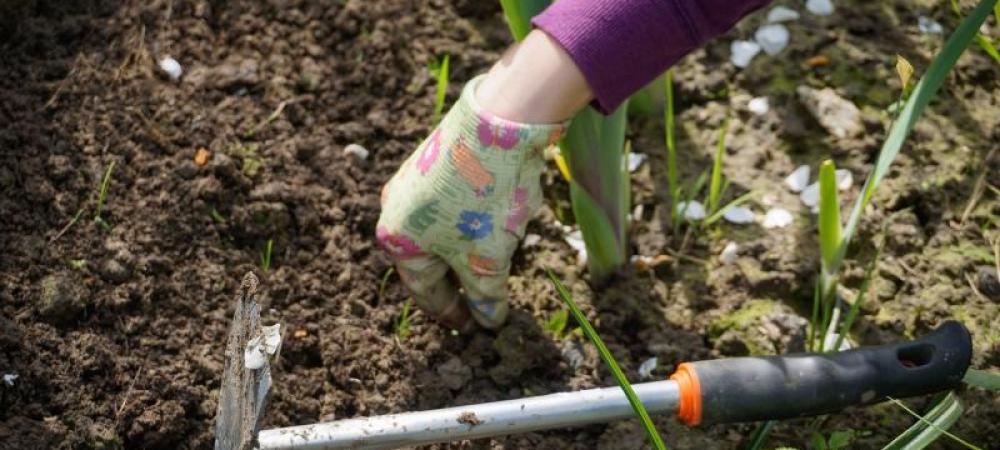
The most common lawn weeds in Kansas City fall into three groups: grassy weeds (like crabgrass), sedges (like nutsedge), and broadleaf weeds (like dandelions and clover). To identify a weed, check three things: leaf shape, stem shape, and the time of year it shows up.
Quick Identification Chart
| Weed | Type | When it appears | How to spot it |
|---|---|---|---|
| Annual bluegrass | Grassy | Spring | White seed heads in light green clumps |
| Bermuda grass | Grassy | Summer | Wiry runners, brown after frost |
| Broadleaf plantain | Broadleaf | Spring to fall | Oval leaves with thick veins |
| Chickweed | Broadleaf | Fall to spring | Tiny white star flowers |
| Clover | Broadleaf | Spring to fall | Three leaflets, white flowers |
| Common purslane | Broadleaf | Summer | Thick, fleshy leaves |
| Crabgrass | Grassy | Summer | Wide blades spreading from a center point |
| Dandelion | Broadleaf | Spring and fall | Toothed leaves, yellow flowers |
| Ground ivy | Broadleaf | Spring | Scalloped leaves, minty smell |
| Henbit | Broadleaf | Early spring | Purple flowers, square stem |
| Goosegrass | Grassy | Midsummer | Silvery-white center |
| Groundsel | Broadleaf | Spring and fall | Lobed leaves, closed yellow flowers |
| Joe-Pye weed | Broadleaf | Late summer | Tall, pink-purple flower clusters |
| Spotted spurge | Broadleaf | Summer | Milky sap, red leaf spot |
| Yellow nutsedge | Sedge | Early summer | Triangular stem |
| Wild violet | Broadleaf | Spring | Heart-shaped leaves, shade |
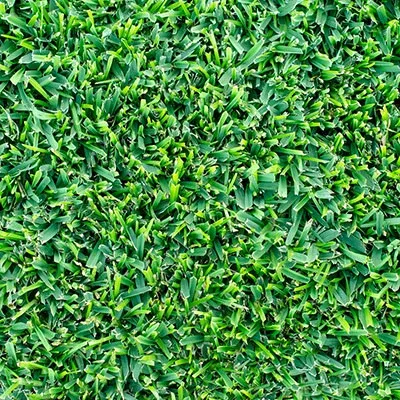
Annual Bluegrass
A winter annual grass that sprouts in fall and stands out in spring with white seed heads.
- Look for: Lighter green clumps with fluffy white seed heads
- Why it's there: Moist, shady, or compacted soil
- When to treat: Pre-emergent in late summer to early fall
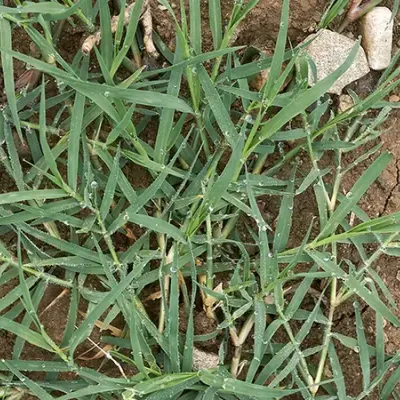
Bermuda Grass
A warm-season grass that becomes a weed when it spreads into fescue lawns.
- Look for: Wiry runners above and below ground; turns tan after frost while fescue stays green
- Why it's there: Creeps in from neighboring lawns and beds
- When to treat: Hard to remove selectively; usually needs repeated treatment or spot removal and reseeding
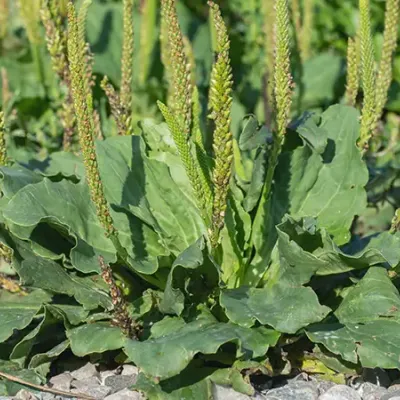
Broadleaf Plantain
A broadleaf perennial that thrives in high-traffic areas.
- Look for: Oval leaves with thick, ribbed veins; tall seed spikes
- Why it's there: Compacted soil
- When to treat: Fall. See how to get rid of plantain naturally.
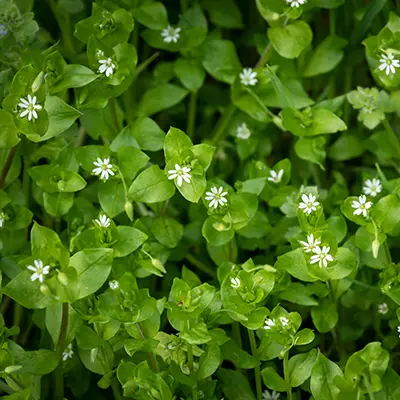
Chickweed
A broadleaf winter annual that forms dense mats in cool, damp weather.
- Look for: Small paired leaves, tiny white star-shaped flowers
- Why it's there: Shade and moisture
- When to treat: Fall or early spring
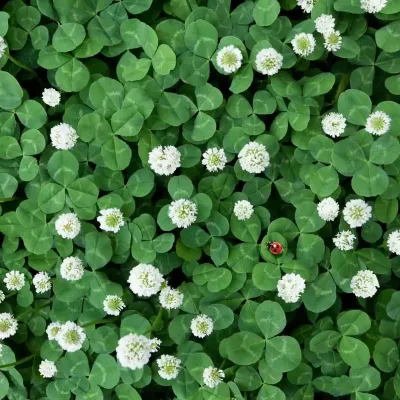
Clover
A broadleaf perennial that spreads by creeping stems and often signals low nitrogen.
- Look for: Three rounded leaflets, round white flowers
- Why it's there: Nitrogen-poor soil
- When to treat: Fall, paired with proper fertilization
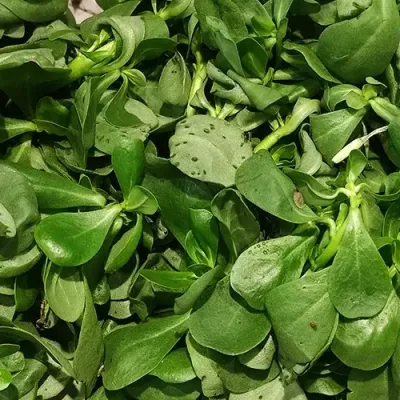
Common Purslane
A succulent summer annual that spreads flat in hot, dry areas.
- Look for: Thick, paddle-shaped leaves on reddish stems
- Why it's there: Heat and thin turf
- When to treat: Early summer; bag pulled pieces, since stems can re-root
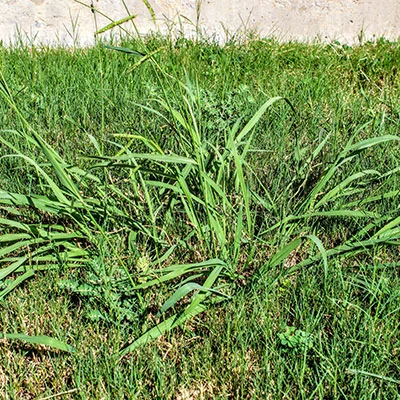
Crabgrass
A summer annual grass that fills thin, sunny spots and dies at the first frost, leaving bare patches.
- Look for: Wide, light green blades spreading low from a center point; finger-like seed heads
- Why it's there: Thin turf and mowing too short
- When to treat: Pre-emergent in early to mid-April, before it sprouts
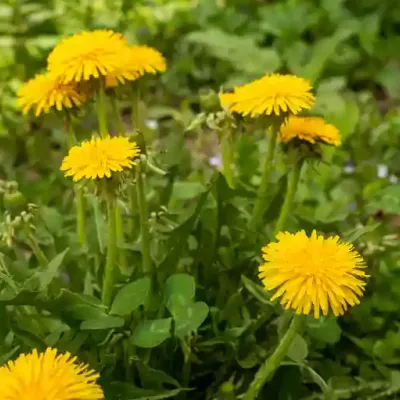
Dandelion
A broadleaf perennial with a deep taproot that regrows if the root is left behind.
- Look for: Toothed leaves in a rosette, yellow flowers, fluffy seed heads
- Why it's there: Wind-blown seeds landing in thin spots
- When to treat: Fall
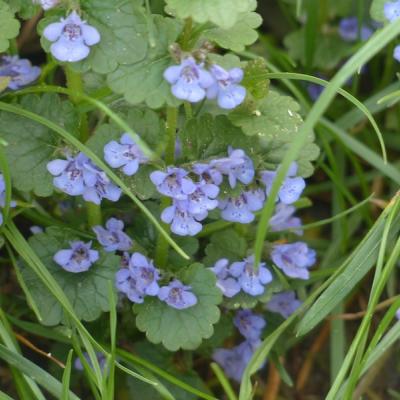
Ground Ivy (Creeping Charlie)
One of the toughest broadleaf weeds to control in Kansas City lawns.
- Look for: Round, scalloped leaves; square stems; minty smell when crushed
- Why it's there: Shade and moist soil
- When to treat: Fall, usually over multiple applications
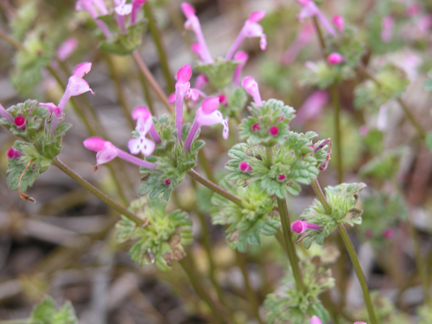
Henbit
A broadleaf winter annual that turns lawns purple in early spring.
- Look for: Square stems, scalloped leaves, small purple flowers
- Why it's there: Thin turf over fall and winter
- When to treat: Fall, while plants are young
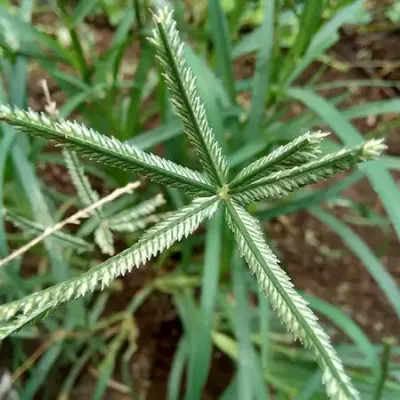
Goosegrass
A summer annual grass often mistaken for crabgrass, but it sprouts a few weeks later.
- Look for: Flat rosette with a silvery-white center
- Why it's there: Compacted soil near driveways and walkways
- When to treat: Pre-emergent in spring; core aeration for the long-term fix
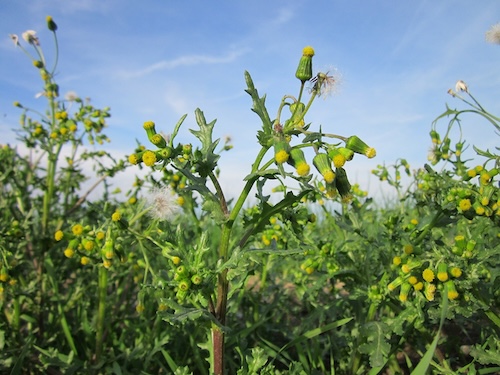
Groundsel
A fast-growing broadleaf annual most common near flower beds and bare spots.
- Look for: Deeply lobed leaves, small yellow flowers that stay mostly closed
- Why it's there: Disturbed soil
- When to treat: Pull before it goes to seed
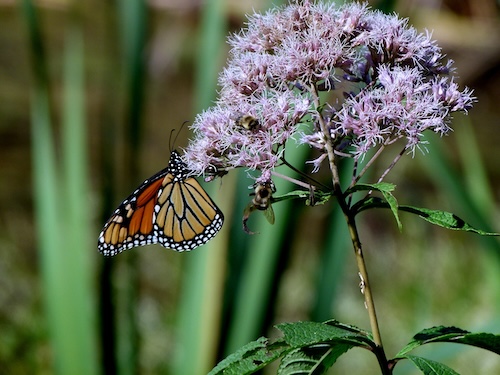
Joe-Pye Weed
A tall native wildflower found along lawn edges and unmowed areas, not in regularly mowed turf.
- Look for: Several feet tall, with large pink-purple flower clusters in late summer
- Why it's there: Moist, unmowed areas
- When to treat: Usually not needed; it's great for pollinators. Dig it out if it's where you don't want it.
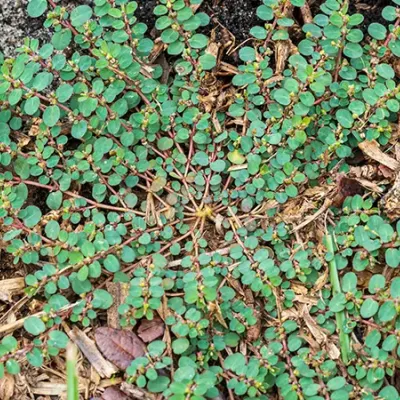
Spotted Spurge
A broadleaf summer annual that forms flat mats along sidewalks and in thin lawns.
- Look for: Milky white sap when snapped; red spot on small oval leaves
- Why it's there: Heat and drought stress
- When to treat: Late spring pre-emergent or while young
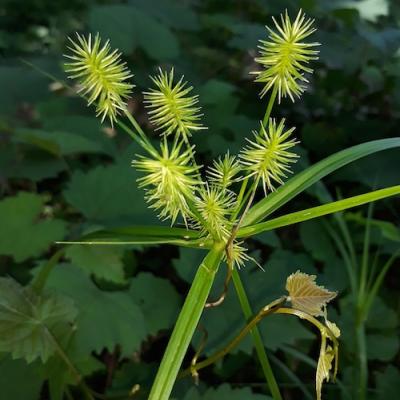
Yellow Nutsedge
A perennial sedge that grows faster than turf and ignores regular grass weed treatments.
- Look for: Triangular stem ("sedges have edges"); shiny yellow-green leaves
- Why it's there: Wet, poorly drained soil
- When to treat: Early summer with a sedge-specific product. Don't pull it; broken tubers regrow.
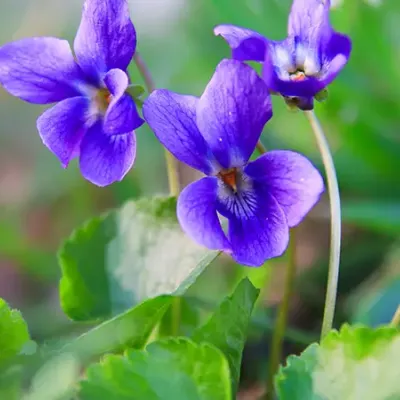
Wild Violet
A shade-loving broadleaf perennial with waxy leaves that resist treatment.
- Look for: Heart-shaped leaves, purple flowers in spring
- Why it's there: Shady spots where grass struggles
- When to treat: Fall, often over more than one season
When to Treat Weeds in Kansas City
| Season | What to do |
|---|---|
| Early to mid-spring | Pre-emergent for crabgrass and summer annuals |
| Late spring to summer | Spot-treat nutsedge, spurge, and purslane while young |
| Fall | Treat perennial and winter annual weeds; aerate and overseed |
A thick, healthy lawn is the best defense. Mow tall fescue at 3 to 4 inches and water deeply but less often. For beds, see how to keep weeds out of your yard.
Frequently Asked Questions
When should I apply crabgrass pre-emergent in Kansas City?
Early to mid-April in most years, before soil temperatures stay above about 55°F. Skip it anywhere you plan to seed in spring, since most pre-emergents also stop grass seed.
Why do weeds keep coming back after I spray them?
Usually the timing was off for that weed's life cycle, the product didn't match the weed type, or the lawn is still thin enough for new seeds to take hold.
Should I pull weeds by hand?
It works for shallow-rooted weeds like groundsel, purslane, and spurge. It often backfires on dandelions and nutsedge, since leftover roots or tubers regrow.
Get Help With Your Weeds
Quality All-Care Lawn Services helps homeowners across the Kansas City metro keep weeds out for good. Our technicians will identify your weeds and build a lawn care program timed to stop them.